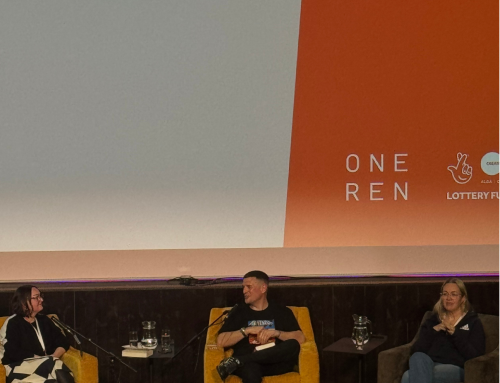
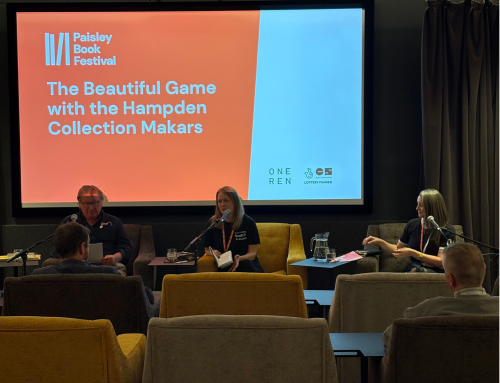
 There was a striking moment during the Paisley Book Festival discussion between Devi Sridhar and Gavin Francis when the conversation shifted from medicine to something much bigger: what if the key to better health isn’t found primarily in hospitals or therapy rooms, but in communities, relationships and the kind of society we build together?
Chaired by Times health correspondent Helen Puttick, the session explored mental health, longevity, social media, inequality and the growing influence of Big Tech, all through the lens of two new books asking urgent questions about how we live now.
Gavin Francis opened with a moving reading from The Unfragile Mind, reflecting on his own experiences of unhappiness as a teenager. Looking back, he said he was relieved that his struggles were never immediately turned into a diagnosis or label. That idea, resisting the urge to medicalise every human difficulty, became one of the session’s recurring themes.
Drawing on more than 30 years as a GP in Scotland, Gavin explained that around a third of GP work relates to mental health, often involving anxiety, depression or addiction. But attitudes have changed dramatically over recent decades. Mental health has become less stigmatised, a hugely positive shift for sure, yet the expansion of diagnostic categories also carries risks.
He pointed to the once-popular claim that depression was simply caused by a “chemical imbalance” or lack of serotonin, an entirely discredited idea now widely criticised as simplistic at best. Today, mental health is understood far more as a “bio-psycho-social” issue: a complex interaction between biology, psychology and the social world around us.
Devi’s contribution widened the discussion from individual health to public policy. Introducing How Not To Die (Too Soon), she joked that after agreeing the title with her publisher, she discovered she had cancer cells and briefly considered renaming it How To Die (Too Soon). Her central question was deceptively simple: how can governments and governance structures help foster the conditions in which people live longer and healthier lives?
Drawing on Japan’s so-called “blue zones”, regions where people frequently live beyond 100, Devi Sridhar highlighted the importance of diet, movement, social connection and purpose. Longevity, she argued, is rarely about miracle cures. It is about environments that make healthier lives easier to live.
Even the Royal Family made an appearance as an example of how routine, activity, nutrition and a strong sense of role or purpose can contribute to long-term wellbeing. The challenge, Devi argued, is how governments can create conditions that replicate these benefits more widely, through housing, transport, public health infrastructure and accessible opportunities for exercise and social connection.
At one point she praised Scotland’s publicly owned water system, noting that access to clean, high-quality tap water is itself an underrated public health intervention.
What united both speakers was a clear rejection of individualised ideas of health and well-being. Increasingly, they suggested, the causes, and the solutions, lie not simply inside individuals, but in the social world itself. That became especially clear during discussion of young people and social media.
Devi described platforms such as Snapchat as part of an “attention economy” designed to keep young people locked into harmful cycles of comparison, pressure and compulsive engagement. Social media, she argued, is “the new tobacco”: industries fully aware of the harms their products create while continuing to profit from them.
Her solution was refreshingly practical. Instead of endlessly expanding therapy services alone, societies should invest more heavily in youth clubs, sports, arts and collective activities that foster belonging and confidence before crisis emerges.
Gavin added an important nuance: not all anxiety is bad, he pointed out. Shielding children from every uncomfortable experience such as presentations, challenges, awkward social moments, can leave them less able to cope later in life. A degree of anxiety, he argued, is part of being human.
Although neither speaker seemed eager to dive fully into political controversy, politics persisted throughout the entire discussion: inequality, corporate power, declining community life and the growing influence of billionaire-owned tech platforms.
Questions from the audience touched on mentoring, AI, social media harms and the pressures facing younger generations. Both speakers agreed that Big Tech increasingly shapes mental wellbeing in ways societies are only beginning to understand.
The session closed on a hopeful note. “We are the adults in the room,” Gavin reflected. “We are responsible for creating a better world for children. We need to focus on kindness and compassion.”
Devi’s conclusion was equally direct: outside pure chance, we already know many of the ingredients for living longer and healthier lives. The challenge is whether we are willing to act on them, collectively rather than individually.
And perhaps that was the real message of the event: saving our health may have less to do with fixing broken individuals, and more to do with rebuilding the social world around them.
Joe Smith